Walk through any grocery store, and you will find fresh vegetables, frozen dinners, packaged snacks, and countless products labeled healthy or natural.
With so many choices, it can be confusing to know what to eat.
Some people believe that all processed foods are unhealthy, while others think eating whole foods requires an expensive grocery budget.
Neither idea tells the complete story.
A whole food diet plan can help you add more nutritious ingredients to your meals without sacrificing convenience or spending more than you can afford.
The important thing is understanding how different foods are prepared and what they contribute to your daily nutrition.
What Are Whole Foods?
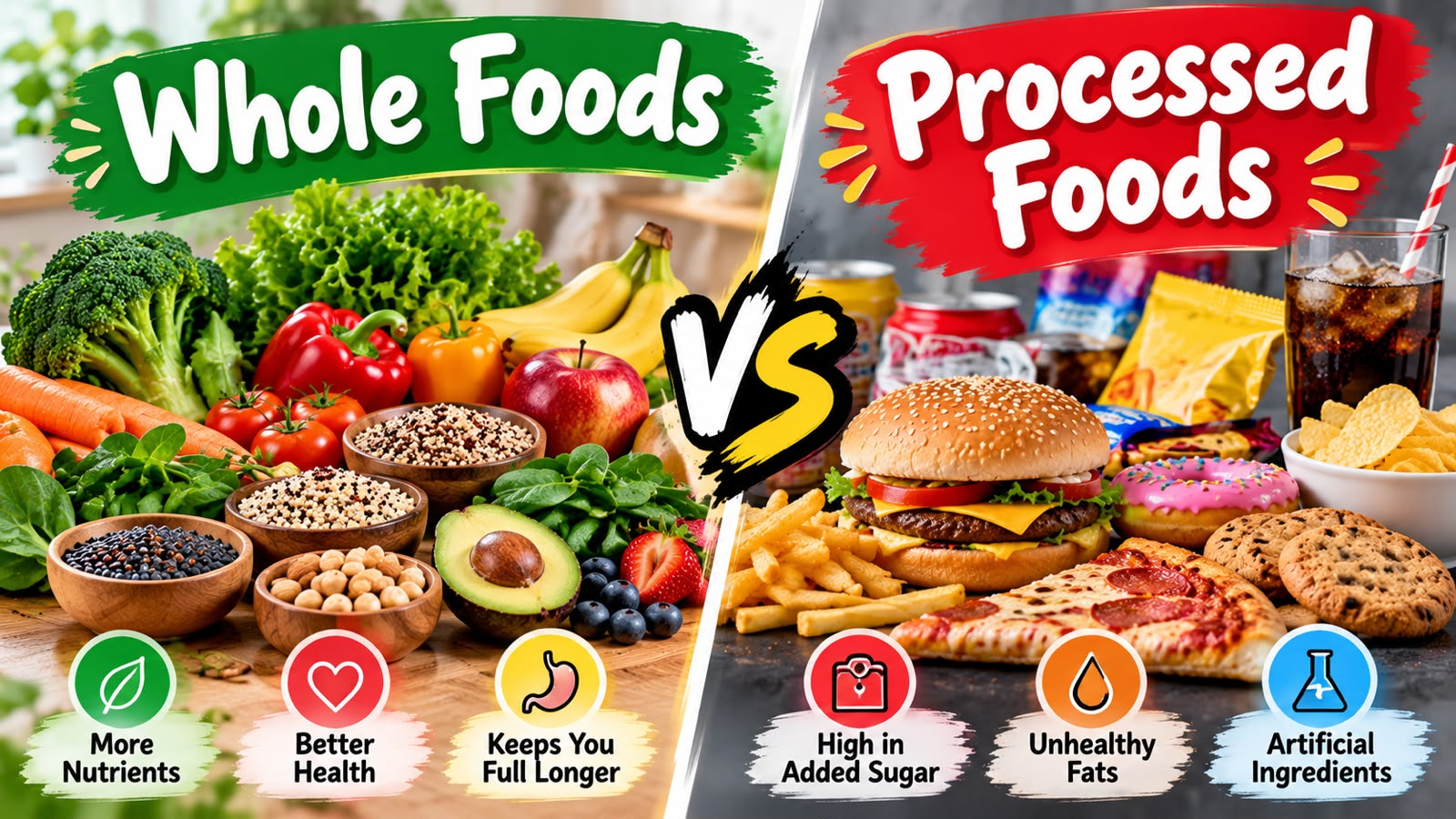
Whole foods are foods that remain close to their natural form and have undergone little processing.
Examples include fresh fruit, vegetables, beans, lentils, eggs, nuts, and whole grains.
These foods often provide important nutrients such as fiber, vitamins, minerals, protein, and healthy fats.
For example, an apple contains natural sugars along with fiber and other nutrients.
Eating a variety of whole foods can support a balanced eating pattern.
What Are Processed Foods?
Processed foods are foods that have been changed from their original form through methods such as freezing, cooking, drying, canning, or adding ingredients.
Processing is not automatically harmful.
Frozen vegetables, canned beans, plain yogurt, and whole-grain bread are examples of processed foods that can fit into a healthy diet.
However, some products contain large amounts of added sugar, sodium, or saturated fat.
The nutritional quality of a food matters more than whether it comes in a package.

Whole Foods vs. Processed Foods: Key Differences
The healthiest choice is not always the least processed product.
For instance, frozen spinach can be a nutritious and convenient alternative to fresh spinach.
What Is a Whole Food Diet Plan?
If you are wondering what is a whole food diet plan is, it is simply a way of organizing meals around vegetables, fruit, whole grains, legumes, nuts, and other nutritious ingredients.
It does not require following complicated food rules.
A balanced plate can include vegetables, a protein source, whole grains, and a modest amount of healthy fat.
You can also include nutritious minimally processed foods such as canned lentils, frozen berries, and plain yogurt.
Benefits of Eating More Whole Foods
Better Fiber Intake
Foods like fruits, vegetables, beans, and whole grains contain fiber, which helps your stomach work properly and keeps you feeling full for longer.
More Nutrient Variety
Eating different colorful vegetables and fruits helps you obtain a wider range of vitamins, minerals, and beneficial plant compounds.
Support for Heart Health
Replacing some foods high in saturated fat and sodium with vegetables, legumes, whole grains, and unsaturated fats can support cardiovascular health.
Easier Meal Planning
Simple ingredients can be used in multiple dishes.
For example, brown rice can be served with vegetables, beans, chicken, or fish.
A Simple 7-Day Whole Food Diet Meal Plan
A whole food diet meal plan should include familiar ingredients and enough flexibility for your schedule.
Here is an example of a beginner-friendly weekly menu.
This is an illustrative menu rather than an individualized diet. Adjust serving sizes, snacks, and food choices according to your nutritional needs.
How to Create a Weekly Meal Plan
A practical weekly meal plan does not require cooking something completely different every day.
Start by choosing two protein sources, two whole grains, and several vegetables.
For example, you could prepare lentils and chicken, cook brown rice, and wash vegetables.
These ingredients can become soups, rice bowls, wraps, and salads.
Preparing ingredients in advance can reduce cooking time while still allowing different meals throughout the week.
How to Eat Healthy on a Budget
Learning how to eat healthy on a budget begins with choosing affordable ingredients rather than buying expensive products marketed as healthy.
Choose Seasonal Produce
Fruits and vegetables that are in season may cost less and offer good flavor.
Compare prices between fresh and frozen options.
Buy Affordable Protein Sources
Eggs, dried lentils, canned beans, and peanut butter can provide useful nutrients at relatively low prices.
Use Frozen Vegetables
Frozen vegetables are convenient because you can prepare only the amount you need.
They can also help reduce food waste.
Plan Before Shopping
Check your kitchen before visiting the store.
Build meals around ingredients you already own and purchase only what is missing.
Compare Unit Prices
A larger package may offer better value, but only when you can store and use the food safely.
Healthy Swaps for Everyday Meals
Making small changes can be easier than replacing your entire diet.
Instead of sugary breakfast cereal, try oatmeal with fruit.
Replace some salty packaged snacks with unsalted nuts, fruit, or yogurt.
Choose water or unsweetened drinks more often than sugar-sweetened beverages.
When buying bread or pasta, look for whole-grain varieties and compare nutrition labels.
These changes can gradually improve the nutritional quality of your meals.
How to Read Food Labels
The ingredient list and Nutrition Facts label can help you compare packaged foods.
Pay attention to:
- Added sugars
- Sodium
- Saturated fat
- Dietary fiber
- Serving size
- Protein and other nutrients
Just because a food has many ingredients does not mean it is bad for your health.
Focus on the overall nutritional value rather than judging products only by the number of ingredients.
Common Mistakes Beginners Should Avoid
One mistake is trying to eliminate every processed food immediately.
This can make eating unnecessarily difficult, especially when you have limited time or money.
Another mistake is assuming that expensive organic or specialty products are essential.
Ordinary vegetables, beans, oats, eggs, and frozen produce can all contribute to nutritious meals.
It is also important to eat enough food and maintain variety rather than relying on a very restrictive menu.
Frequently Asked Questions
Are all processed foods unhealthy?
No. Foods such as frozen vegetables, canned beans, and plain yogurt can be nutritious despite being processed.